
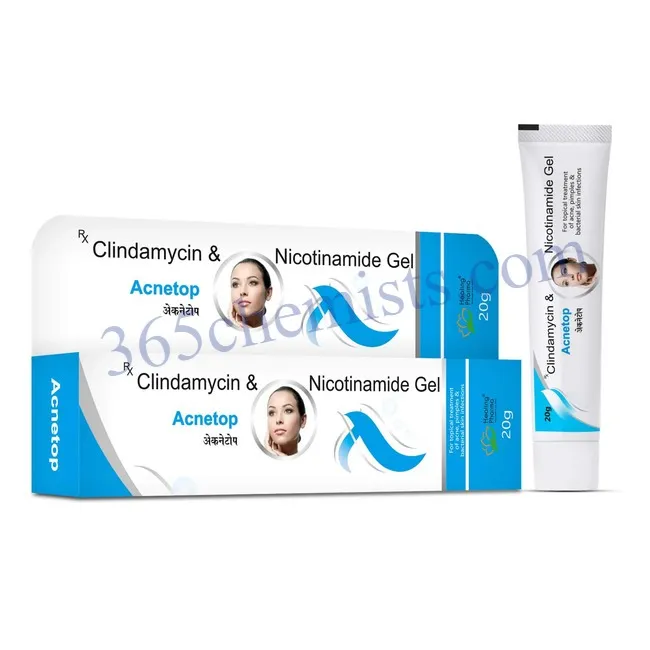

Say goodbye to the frustration of frequent pimples, acne breakouts, and unwanted skin redness with Acnetop Gel, a topical acne treatment formulated to help manage acne-prone skin. Combining Clindamycin 1% and Nicotinamide 4%, this dermatologist-prescribed formulation targets acne-causing bacteria while helping calm inflammation, redness, and swelling. If persistent breakouts affect your confidence and daily routine, Acnetop Gel may be a suitable treatment option when recommended by your healthcare professional. Discover its ingredients, benefits, and safe application instructions, and explore our product page to place your order with a valid prescription.
What Is Acnetop Gel?
Acnetop Gel is a topical combination medication used to treat acne vulgaris, a common skin condition that develops when hair follicles become clogged with excess oil, dead skin cells, and other impurities. Acne can appear on the face, forehead, cheeks, chin, chest, and back. It may cause pimples, inflamed bumps, whiteheads, and other uncomfortable skin changes.
This medication combines two active ingredients: Clindamycin and Nicotinamide. Clindamycin belongs to the lincosamide antibiotic group, while Nicotinamide is a form of vitamin B3 with anti-inflammatory properties. Together, these ingredients help address bacterial involvement and inflammation associated with acne.
Acnetop Gel is manufactured and marketed by Healing Pharma India Pvt. Ltd. and is commonly available in a 20-gram tube. Always check the product packaging to confirm its composition, manufacturer, expiry date, and pack size before purchasing.
Key Ingredients and Their Benefits
1. Clindamycin 1% w/w
Clindamycin is an antibiotic that helps control the growth of acne-associated bacteria, particularly Cutibacterium acnes. Bacterial activity contributes to inflammatory acne, including red pimples and swollen bumps. By reducing bacterial growth, Clindamycin helps manage inflammatory breakouts and supports an improvement in acne symptoms.
However, unnecessary or prolonged antibiotic use can encourage bacterial resistance. Healthcare professionals may recommend combining topical Clindamycin with benzoyl peroxide or another appropriate acne treatment to reduce this risk.
2. Nicotinamide 4% w/w
Nicotinamide, also known as Niacinamide, is a vitamin B3 derivative with anti-inflammatory properties. It helps calm irritated skin and reduce acne-associated redness and swelling. It also supports normal skin barrier function.
The combination of these ingredients makes Acnetop Gel useful for managing inflammatory acne when a dermatologist considers this treatment appropriate.
Benefits of Acnetop Gel
Acnetop Gel offers several potential benefits for people experiencing inflammatory acne.
Helps manage acne breakouts: Its Clindamycin component reduces acne-associated bacterial growth, helping manage inflammatory pimples and breakouts.
Reduces skin inflammation: Nicotinamide provides anti-inflammatory support that may help reduce redness, swelling, and tenderness around affected areas.
Supports clearer-looking skin: Regular use according to medical instructions can help improve acne symptoms over time.
Targets acne-associated bacteria: Clindamycin works against bacteria involved in inflammatory acne, helping control bacterial activity on affected skin.
Helps manage oily, acne-prone skin: Nicotinamide may support skin barrier function and help regulate some aspects of skin oiliness.
Remember that results vary between individuals. Acnetop Gel does not treat every type of acne, and it cannot guarantee the prevention of future breakouts or acne scars.
How Does Acnetop Gel Work?
Understanding how Acnetop Gel works can help you use it more effectively. Its two active ingredients address different aspects of inflammatory acne.
Clindamycin works by interfering with bacterial protein production, which prevents susceptible bacteria from growing and multiplying. This action helps reduce the bacterial contribution to acne-related inflammation.
Nicotinamide works differently. It provides anti-inflammatory effects that help calm irritated skin and reduce visible redness and swelling. It also supports the skin’s natural protective barrier.
Together, these ingredients address bacterial activity and inflammation associated with acne. However, the formulation does not directly remove every clogged pore or treat all underlying causes of acne. Your dermatologist may recommend additional treatments depending on your skin condition.
How to Use Acnetop Gel
Follow your dermatologist’s instructions whenever you apply Acnetop Gel. Correct application helps you get the intended benefits while reducing unnecessary skin irritation.
1. Clean your skin: Wash the affected area with a gentle cleanser to remove dirt, sweat, and excess oil.
2. Dry the affected area: Gently pat your skin with a clean, soft towel. Avoid rubbing irritated pimples.
3. Apply a thin layer: Use clean fingertips to spread a thin layer over the affected acne-prone area, following your prescribed directions.
4. Avoid sensitive areas: Keep the medication away from your eyes, lips, nostrils, and other sensitive areas.
5. Wash your hands: Clean your hands after applying the gel unless you are treating acne on your hands.
6. Follow your treatment schedule: Apply the medication at the frequency recommended by your healthcare professional.
Do not apply excessive amounts to achieve faster results. Overapplication may increase dryness, irritation, and other unwanted reactions.
Possible Side Effects of Acnetop Gel
Like other topical acne medications, Acnetop Gel may cause side effects in some individuals. Most reported skin reactions are mild, but you should monitor your skin throughout treatment.
Common side effects include:
– Dryness or excessive skin dryness.
– Mild burning or stinging sensations.
– Skin redness or irritation.
– Itching around the application area.
– Peeling or increased skin sensitivity.
– Temporary worsening of acne symptoms.
These reactions may improve as your skin adjusts to treatment. However, contact your healthcare professional if they persist, become uncomfortable, or worsen.
Stop using the medication and seek immediate medical attention if you experience facial swelling, difficulty breathing, severe allergic reactions, or other serious symptoms.
Although topical Clindamycin generally causes fewer systemic effects than oral antibiotics, it can rarely contribute to antibiotic-associated diarrhea or colitis. Contact a healthcare professional promptly if you develop severe, persistent, or bloody diarrhea.
Precautions and Safety Information
Before starting Acnetop Gel, discuss your medical history and current medications with your healthcare professional.
– Allergies: Avoid this medication if you have a known allergy to Clindamycin, Lincomycin, Nicotinamide, or any other ingredient in the formulation.
– Pregnancy: Consult your doctor before using this medication during pregnancy.
– Breastfeeding: Ask your healthcare professional whether topical treatment is appropriate. Avoid applying it to the breast or areas that may contact your infant.
– Sensitive skin: Inform your dermatologist if you have eczema, severe dryness, or damaged skin.
– Other acne treatments: Tell your doctor about benzoyl peroxide, retinoids, exfoliating acids, and other skincare products you use.
– Sun protection: Use a broad-spectrum SPF 30 or higher sunscreen during the day to protect your skin.
– Antibiotic resistance: Never use topical antibiotics longer or more frequently than prescribed.
Avoid squeezing, scratching, or picking pimples because these habits can worsen inflammation and increase the risk of acne scars.
Storage Instructions
Store Acnetop Gel according to the instructions printed on its packaging. Available product information recommends storage below 25°C. Keep the tube tightly closed and away from excessive heat, direct sunlight, and moisture.
Keep this medication away from children and pets. Do not use expired medication, and dispose of unused products according to local pharmaceutical disposal recommendations.
Why Choose Acnetop Gel?
Choosing an appropriate acne treatment is an important step toward healthier-looking skin. Acnetop Gel combines two active ingredients with complementary actions to help manage inflammatory acne.
Its topical formulation allows you to apply the medication directly to affected skin. When used according to a dermatologist’s instructions, it can become part of a medically supervised acne-management routine.
Before ordering, check the composition, product strength, packaging, expiry date, and prescription requirements. Purchase from a licensed and reputable pharmacy to support product authenticity and safe medication use.
Ready to explore Acnetop Gel? Visit our product page to check product details, availability, and ordering information. Add the product to your cart and complete your purchase after providing a valid prescription where required.
FAQs
What is Acnetop Gel used for?
Acnetop Gel is a topical prescription medication used to manage acne vulgaris. It helps control acne-associated bacterial growth and inflammation, reducing pimples, redness, and swelling.
What are the main ingredients in Acnetop Gel?
It contains two active ingredients: Clindamycin 1% w/w and Nicotinamide 4% w/w. Clindamycin helps control acne-associated bacteria, while Nicotinamide provides anti-inflammatory benefits.
How long does Acnetop Gel take to show results?
Results vary depending on acne severity, skin type, and treatment consistency. Some people may notice improvement after several weeks. Follow your dermatologist’s recommended treatment duration.
Can I use Acnetop Gel every day?
You can use it regularly if your dermatologist recommends daily application. Follow the prescribed frequency and avoid applying more than directed.
Can Acnetop Gel remove acne scars?
No. Acnetop Gel primarily treats acne and associated inflammation. It is not specifically designed to remove existing acne scars or deep pigmentation.
Reviews
There are no reviews yet.