
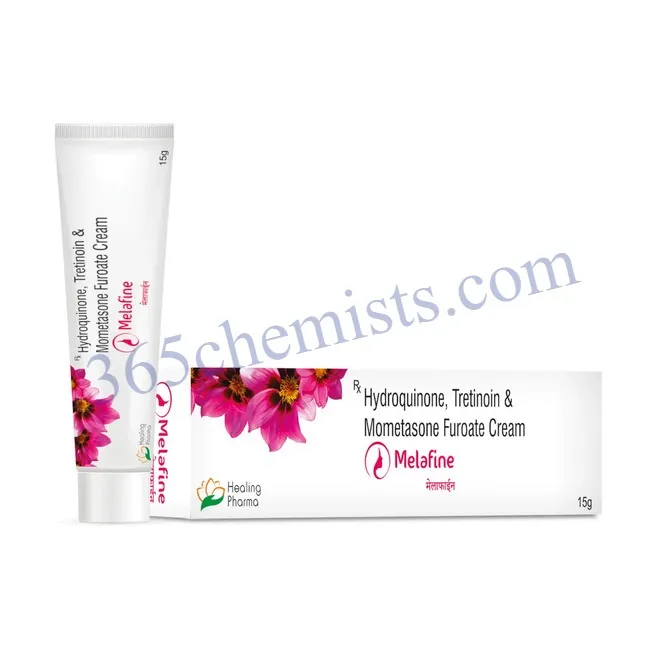


Looking for information about a prescription cream for melasma, dark facial patches, and uneven skin pigmentation? Melafine Cream combines three active ingredients that work through different mechanisms to help reduce excess pigmentation and improve the appearance of affected skin. It contains Hydroquinone, Mometasone, and Tretinoin, which help address melanin production, inflammation, and skin cell turnover. If your dermatologist has recommended this treatment, explore its composition, uses, application instructions, and safety precautions before ordering from our pharmacy.
What Is Melafine Cream?
Melafine Cream is a prescription dermatological medication marketed by Healing Pharma India Pvt. Ltd. Healthcare professionals prescribe it primarily for melasma, a skin condition that causes brown, grey-brown, or dark patches, particularly on the face.
This formulation combines three active pharmaceutical ingredients: Hydroquinone 2%, Mometasone 0.1%, and Tretinoin 0.025%. Each ingredient performs a different function to help manage pigmentation and associated skin inflammation.
Melasma commonly affects the cheeks, forehead, nose, and upper lip. Sun exposure, hormonal changes, pregnancy, and genetic factors can contribute to its development.
This medication is not an ordinary fairness cream or cosmetic moisturizer. Its corticosteroid and retinoid components require careful medical supervision.
Melafine Cream Composition
Understanding the active ingredients helps explain how this combination treatment works.
1. Hydroquinone 2%
Hydroquinone is a skin-lightening medication that reduces melanin production. Melanin is the natural pigment responsible for skin colour. Excessive melanin production can contribute to dark patches and uneven skin tone.
By interfering with melanin formation, hydroquinone helps gradually lighten areas affected by hyperpigmentation. Patients should use it only for the prescribed duration because excessive use can cause unwanted pigmentation changes.
2. Mometasone 0.1%
Mometasone is a topical corticosteroid that helps reduce inflammation, redness, itching, and irritation. It suppresses inflammatory responses in the skin.
However, prolonged or inappropriate use can cause skin thinning, visible blood vessels, stretch marks, and other steroid-related complications.
3. Tretinoin 0.025%
Tretinoin belongs to the retinoid family of medicines derived from vitamin A. It encourages skin cell turnover and helps remove older surface skin cells. This process supports the treatment of certain pigmentation conditions and complements hydroquinone’s action.
Tretinoin may initially cause dryness, peeling, redness, and irritation.
Uses and Potential Benefits
Dermatologists may prescribe Melafine Cream primarily for melasma and selected cases of facial hyperpigmentation.
Its potential benefits include:
Helps Reduce Dark Patches: Hydroquinone helps decrease excess melanin production, gradually improving the appearance of certain dark facial patches.
Supports Melasma Treatment: The combination may help manage melasma when a dermatologist determines that all three ingredients are appropriate.
Promotes Skin Cell Renewal: Tretinoin encourages the natural turnover of skin cells, helping improve the appearance of uneven pigmentation.
Helps Control Inflammation: Mometasone reduces inflammatory symptoms, including redness and irritation, when used appropriately.
Improves Uneven Skin Appearance: With correct medical supervision, the combination may help improve the appearance of selected pigmentation concerns.
Results vary between individuals. Melasma can return, particularly with continued sun exposure or hormonal triggers. This medication does not guarantee permanent pigmentation removal.
How Does Melafine Cream Work?
Melafine Cream works through three different mechanisms.
Hydroquinone reduces melanin production, helping lighten areas with excess pigmentation. Mometasone suppresses inflammatory activity and helps control redness and irritation. Tretinoin promotes skin cell turnover, supporting the gradual removal of pigmented surface cells.
Together, these ingredients target different processes involved in melasma. However, the corticosteroid component makes treatment duration and application frequency particularly important.
A dermatologist should determine whether this combination suits your skin condition and monitor your response.
How to Apply Melafine Cream
- Always follow your dermatologist’s instructions and the product packaging.
- Wash your hands before application.
- Gently cleanse the affected skin area.
- Allow your skin to dry completely.
- Apply a thin layer only to the prescribed area.
- Avoid contact with your eyes, lips, nostrils, and other sensitive areas.
- Wash your hands after applying the medication.
- Follow the prescribed treatment schedule and duration.
Your dermatologist may recommend evening application, but you should follow your individual prescription rather than assume a standard schedule.
Use broad-spectrum sunscreen with SPF 30 or higher during the day. Wear protective clothing and limit direct sunlight exposure to help prevent further pigmentation.
Possible Side Effects
Some patients may experience unwanted reactions while using this medication.
Common possible side effects include:
- Skin redness.
- Burning or stinging.
- Dryness and peeling.
- Itching.
- Skin irritation.
- Increased sensitivity to sunlight.
Long-term or inappropriate use may cause skin thinning, stretch marks, visible blood vessels, and changes in pigmentation. Prolonged hydroquinone use can also cause exogenous ochronosis, a potentially persistent blue-black skin discoloration.
Stop treatment and contact your dermatologist if you experience severe irritation, unusual darkening, swelling, or worsening skin symptoms.
Important Precautions and Warnings
Before using Melafine Cream, discuss your medical history with your healthcare professional.
Sun Protection: Tretinoin can increase irritation and sun sensitivity. Protect treated areas with sunscreen and suitable clothing.
Pregnancy: Avoid using this combination during pregnancy unless a specialist has evaluated the situation and provided appropriate guidance. Tretinoin requires particular caution.
Breastfeeding: Consult your healthcare provider before treatment. Avoid applying the medication where an infant could contact it.
Sensitive Skin: Avoid applying the cream near your eyes, mouth, and other sensitive areas.
Children: Do not use this prescription combination in children unless a specialist specifically recommends it.
Treatment Duration: Do not use it longer than prescribed. Mometasone is a corticosteroid, and prolonged use can damage the skin.
Other Skin Products: Inform your dermatologist about other retinoids, exfoliating products, acne treatments, and skin-lightening preparations you use.
Storage Instructions
Store the product according to the manufacturer’s packaging instructions. Keep the tube tightly closed and away from excessive heat, moisture, and direct sunlight.
Keep it out of children’s reach. Check the expiry date and avoid using damaged or expired products.
Why Order Melafine Cream From Our Pharmacy?
When purchasing prescription dermatological medication, product authenticity and reliable pharmacy service matter.
Our pharmacy aims to provide convenient access to product information and purchasing assistance. Before ordering, verify the product name, active ingredients, manufacturer, packaging, and expiry date.
If your dermatologist has prescribed Melafine Cream, contact our pharmacy to check availability, pack size, pricing, and prescription requirements.
Check product availability and place your order through our pharmacy today. Our team can assist with product enquiries and applicable prescription requirements.
FAQs
What is Melafine Cream used for?
It is primarily prescribed for melasma, a pigmentation condition that causes dark patches on the face. It may also be recommended for selected hyperpigmentation conditions.
What are the main ingredients?
It contains Hydroquinone 2%, Mometasone 0.1%, and Tretinoin 0.025%.
Does Melafine Cream help remove dark spots?
It may help improve certain pigmentation concerns by reducing melanin production and promoting skin cell turnover. A dermatologist should determine whether it suits your condition.
Can I use this cream every day?
Use it only according to your dermatologist’s instructions. Do not increase application frequency or treatment duration independently.
Can I apply it during the daytime?
Follow your dermatologist’s instructions. Many treatment plans recommend evening application because tretinoin can increase skin sensitivity. Use sunscreen during the day.

Reviews
There are no reviews yet.