
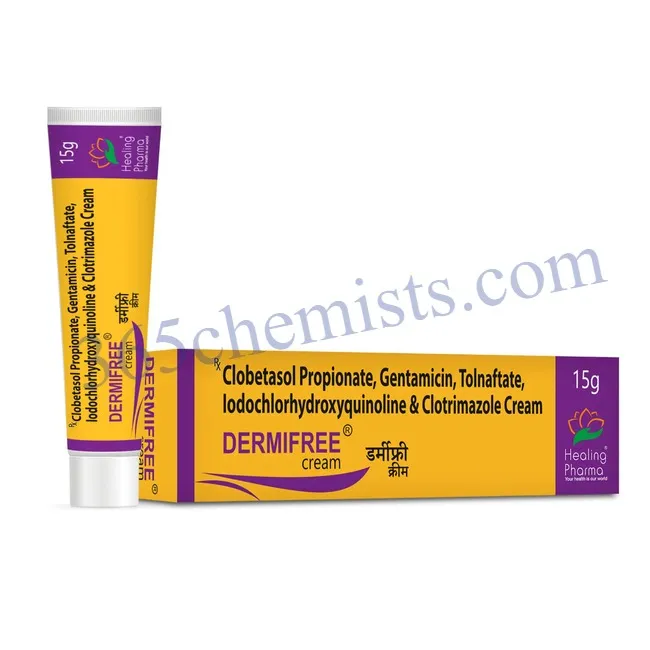

Are you searching for information about a topical treatment for certain bacterial and fungal skin infections accompanied by inflammation, redness, and itching? Dermifree Cream combines five active ingredients to provide antifungal, antibacterial, and anti-inflammatory actions when prescribed for an appropriate skin condition. Its combination formulation targets susceptible microorganisms while helping reduce uncomfortable inflammatory symptoms. Discover its ingredients, potential benefits, application instructions, and safety precautions before purchasing. If your healthcare professional has recommended this medication, explore its availability and order genuine products through our pharmacy.
What Is Dermifree Cream?
Dermifree Cream is a prescription dermatological medication marketed by Healing Pharma India Pvt. Ltd. It contains five active ingredients that work through different mechanisms to address selected skin conditions involving susceptible bacterial or fungal infections and inflammation.
The formulation combines Clobetasol Propionate, Gentamicin, Clotrimazole, Clioquinol, and Tolnaftate. These ingredients provide corticosteroid, antibacterial, and antifungal actions.
Healthcare professionals may consider this combination for particular skin conditions when the patient requires these different therapeutic effects. However, it is not suitable for every skin rash or infection.
Since the formulation contains clobetasol, a potent topical corticosteroid, patients must use it carefully and follow their healthcare professional’s instructions. Avoid using it as a routine cosmetic cream or general-purpose itching treatment.
Dermifree Cream Composition and Active Ingredients
Understanding the ingredients helps explain how this medication works.
1. Clobetasol Propionate 0.05%
Clobetasol Propionate is a potent topical corticosteroid. It reduces inflammatory responses in the skin by suppressing substances responsible for redness, swelling, and itching. It may provide relief from inflammation associated with selected steroid-responsive skin conditions.
However, prolonged or inappropriate use can cause skin thinning, stretch marks, and other corticosteroid-related complications.
2. Gentamicin 0.1%
Gentamicin belongs to the aminoglycoside antibiotic group. It interferes with bacterial protein synthesis, helping control susceptible bacteria responsible for certain skin infections.
3. Clotrimazole 1%
Clotrimazole is an antifungal medication that interferes with ergosterol production. Ergosterol helps maintain fungal cell membranes. By disrupting this process, clotrimazole helps control susceptible fungal organisms.
4. Clioquinol 1%
Clioquinol, also known as iodochlorhydroxyquin, has antibacterial and antifungal properties. It helps inhibit susceptible microorganisms and contributes to the combination’s antimicrobial activity.
5. Tolnaftate 1%
Tolnaftate is an antifungal ingredient that interferes with fungal growth. It helps control susceptible dermatophytes associated with certain superficial fungal infections.
Together, these ingredients provide different therapeutic actions. A healthcare professional should determine whether the combination is appropriate for the diagnosed condition.
Uses and Potential Benefits of Dermifree Cream
Healthcare professionals may prescribe Dermifree Cream for selected skin conditions involving inflammation and susceptible bacterial or fungal infections.
Its potential benefits include:
Helps Manage Skin Inflammation: Clobetasol helps reduce inflammatory activity and may improve redness, swelling, and itching associated with appropriate skin conditions.
Provides Antifungal Activity: Clotrimazole and tolnaftate help control susceptible fungi. Clioquinol also contributes antifungal activity.
Provides Antibacterial Support: Gentamicin and clioquinol help control susceptible bacteria associated with certain skin infections.
Helps Relieve Itching: The corticosteroid component can reduce inflammatory itching when the diagnosed condition responds to steroid treatment.
Supports Targeted Combination Therapy: The five ingredients address different treatment targets. A healthcare professional may consider the formulation when a specific condition requires these combined actions.
Importantly, this medication does not automatically cure ringworm, athlete’s foot, eczema, psoriasis, or every type of skin infection. Steroid-containing combinations can mask fungal infections and potentially worsen them. Patients should obtain an accurate diagnosis before using this product.
How Does Dermifree Cream Work?
Dermifree Cream works through the combined actions of its five active ingredients.
Clobetasol reduces inflammatory responses that contribute to redness, swelling, and itching. Gentamicin interferes with bacterial protein production. Clotrimazole and tolnaftate disrupt processes that fungi need to grow and survive. Clioquinol contributes additional antibacterial and antifungal activity.
These different mechanisms target susceptible microorganisms while addressing inflammation. This combination may be appropriate for selected conditions when a healthcare professional confirms that the treatment’s ingredients are necessary.
However, the cream cannot replace proper diagnosis, appropriate hygiene, or other treatments when a skin condition requires them.
How to Apply Dermifree Cream
- Always follow your doctor’s instructions and the product packaging.
- Wash your hands before applying the medication.
- Gently clean the affected skin area.
- Dry the area thoroughly.
- Apply a thin layer to the prescribed area.
- Avoid applying excessive quantities.
- Wash your hands after application unless you are treating your hands.
- Follow the prescribed frequency and treatment duration.
Do not cover the treated area with airtight dressings unless your doctor specifically recommends it. Avoid contact with the eyes, mouth, and other mucous membranes.
Never increase the application frequency or continue treatment longer than prescribed.
Possible Side Effects
Some patients may experience unwanted reactions while using this medication.
Possible side effects include:
- Burning or stinging at the application site.
- Skin irritation.
- Redness.
- Itching.
- Dryness.
- Allergic skin reactions.
Prolonged or inappropriate clobetasol use can cause skin thinning, stretch marks, visible blood vessels, and changes in skin pigmentation.
Applying potent topical corticosteroids over large areas or under airtight dressings may increase absorption and the risk of systemic adverse effects.
Stop using the cream and contact your healthcare professional if you experience significant irritation, worsening symptoms, or an allergic reaction. Seek emergency assistance for breathing difficulties or serious facial or throat swelling.
Precautions and Warnings
Before starting Dermifree Cream, discuss your medical history and existing medications with your healthcare professional.
Avoid Self-Medication: Do not use this combination for an undiagnosed rash. Similar-looking skin conditions may require completely different treatments.
Sensitive Skin Areas: Avoid applying the medication to the face, groin, genital area, or underarms unless your doctor specifically recommends it.
Pregnancy and Breastfeeding: Consult your healthcare provider before using this medication during pregnancy or breastfeeding.
Children: Children can absorb more topical corticosteroid through their skin. Use this medication in children only when prescribed and carefully supervised.
Existing Skin Conditions: Inform your doctor if you have acne, rosacea, viral skin infections, open wounds, or allergies to any of the ingredients.
Treatment Duration: Avoid prolonged use. Contact your healthcare professional if symptoms persist, return, or worsen.
Storage Instructions
Store Dermifree Cream according to the manufacturer’s packaging instructions. Keep the tube securely closed and protect it from excessive heat, moisture, and direct sunlight. Follow the temperature instructions printed on the product label.
Keep the medication out of children’s reach. Check the expiry date and avoid using damaged or expired products.
Why Order Dermifree Cream From Our Pharmacy?
Choosing a reliable pharmacy matters when purchasing dermatological medications. Our pharmacy aims to provide a convenient shopping experience with helpful product information and assistance with availability.
When purchasing Dermifree Cream, check the manufacturer’s details, active ingredients, packaging, expiry date, and prescribed pack size. Always purchase prescription medications through pharmacies that follow applicable regulations.
If your doctor has recommended this product, contact our pharmacy to check current availability, pricing, packaging, and prescription requirements.
Explore Dermifree Cream availability and place your order through our pharmacy today. Our team can assist with product-related enquiries and purchasing information.
FAQs
What is Dermifree Cream used for?
It may be prescribed for selected skin conditions involving susceptible bacterial or fungal infections accompanied by inflammation. It provides antibacterial, antifungal, and anti-inflammatory actions.
What are the active ingredients in Dermifree Cream?
It contains Clobetasol Propionate 0.05%, Gentamicin 0.1%, Clotrimazole 1%, Clioquinol 1%, and Tolnaftate 1%.
Does Dermifree Cream contain steroids?
Yes. It contains clobetasol propionate, a potent topical corticosteroid. Use it only under medical supervision.
Can I use Dermifree Cream for ringworm?
Do not self-treat ringworm with this combination. Its steroid component can mask symptoms and potentially worsen fungal infections. Ask your healthcare professional about an appropriate antifungal treatment.
Can I apply Dermifree Cream to my face?
Avoid facial application unless your doctor specifically prescribes it. Facial skin is particularly susceptible to corticosteroid-related side effects.
Reviews
There are no reviews yet.