
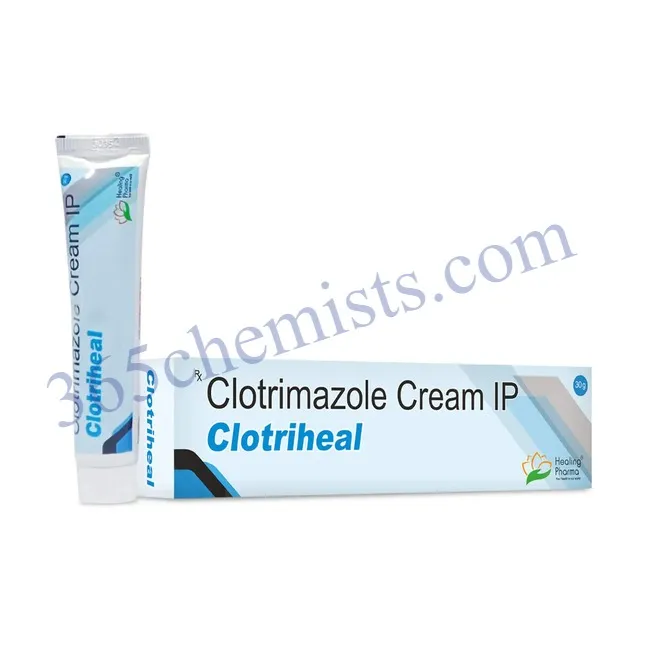


Are you looking for an effective antifungal treatment for common fungal skin infections? Clotriheal Cream contains Clotrimazole 1%, an antifungal ingredient that helps control fungal growth and manage skin infections responsible for itching, redness, scaling, and irritation. Whether you are dealing with ringworm, athlete’s foot, or jock itch, understanding the right treatment can help you take better care of your skin. Explore the ingredients, uses, application instructions, and precautions of Clotriheal Cream before checking availability and ordering from our pharmacy.
What Is Clotriheal Cream?
Clotriheal Cream is a topical antifungal medication marketed by Healing Pharma India Pvt. Ltd. It contains Clotrimazole 1% w/w, which belongs to the imidazole group of antifungal medicines. Healthcare professionals use clotrimazole to treat several superficial fungal infections affecting the skin.
Fungi can grow in warm, moist areas of the body, including the feet, groin, underarms, and skin folds. These infections may cause itching, redness, scaling, burning, and discomfort. The antifungal ingredient helps control the organisms responsible for these symptoms.
The cream provides a convenient topical application that delivers the active ingredient directly to the affected skin. Patients should use it according to the product instructions and their healthcare professional’s recommendations.
Clotriheal Cream Composition and Active Ingredient
The main active ingredient in this formulation is:
Clotrimazole 1% w/w
Clotrimazole is a broad-spectrum antifungal medicine. It works by interfering with the production of ergosterol, an essential component of fungal cell membranes.
Without sufficient ergosterol, fungal cell membranes cannot maintain their normal structure and function. This disruption interferes with fungal growth and helps control the infection.
The formulation is designed for external skin application. Always check the product packaging to confirm its composition and strength before use.
Uses and Benefits of Clotriheal Cream
Healthcare professionals may recommend Clotriheal Cream for various superficial fungal skin infections caused by susceptible organisms.
1. Helps Treat Ringworm
Ringworm is a common fungal skin infection that often produces circular, red, itchy patches. Despite its name, a fungus causes this condition rather than a worm. Clotrimazole helps control the fungi responsible for ringworm and supports skin recovery.
2. Helps Manage Athlete’s Foot
Athlete’s foot affects the skin between the toes and sometimes the soles of the feet. It may cause itching, peeling, cracking, and burning. Clotrimazole helps control the fungal growth responsible for this condition.
3. Helps Relieve Jock Itch
Jock itch commonly affects the groin and inner thighs. It can produce an itchy, red, and sometimes scaly rash. An appropriate clotrimazole treatment helps control susceptible fungi responsible for this infection.
4. Helps Manage Cutaneous Candidiasis
Certain Candida fungi can cause infections in moist skin folds. These infections may produce redness, irritation, and itching. Clotrimazole helps control susceptible Candida organisms.
5. Helps Treat Pityriasis Versicolor
Pityriasis versicolor is a superficial fungal condition that causes lighter or darker patches on the skin. Healthcare professionals may recommend clotrimazole for suitable cases.
How Does Clotriheal Cream Work?
Clotriheal Cream works by targeting the fungal organisms responsible for susceptible skin infections.
Its active ingredient, clotrimazole, interferes with ergosterol synthesis. Ergosterol plays an important role in maintaining fungal cell membranes. When the fungus cannot produce enough ergosterol, its cell membrane becomes damaged and loses its normal function.
This action helps stop fungal growth and allows the affected skin to recover gradually.
As the infection improves, symptoms such as itching, redness, scaling, and irritation may also decrease. However, patients should complete the recommended treatment course even when they notice early improvement.
How to Apply Clotriheal Cream
Follow your healthcare professional’s instructions and the product label for correct application.
- Wash your hands before applying the cream.
- Gently clean the affected skin area.
- Dry the area thoroughly, especially between the toes and inside skin folds.
- Apply a thin layer over the affected area and the surrounding skin as directed.
- Gently spread the cream without rubbing aggressively.
- Wash your hands after application unless you are treating your hands.
- Continue treatment for the recommended duration.
Apply the medication at the prescribed frequency. Do not use excessive quantities or stop treatment early simply because the itching has improved.
Keep the affected area clean and dry to support treatment and reduce the risk of reinfection.
Possible Side Effects
Most people tolerate topical clotrimazole well when they use it correctly. However, some individuals may experience local reactions.
Possible side effects include:
- Mild burning or stinging.
- Skin redness.
- Itching or irritation.
- Dryness or peeling.
- Local discomfort.
- Allergic skin reactions.
Stop using the cream and contact your healthcare professional if you experience severe irritation, swelling, blistering, or worsening symptoms. Seek urgent medical assistance if you develop signs of a serious allergic reaction.
Precautions and Safety Information
Before using Clotriheal Cream, consider the following precautions.
External Application: Use the cream on the skin as directed. Avoid contact with the eyes, mouth, and other mucous membranes.
Pregnancy: Consult your healthcare provider before using clotrimazole during pregnancy.
Breastfeeding: Ask your doctor or pharmacist whether this medication is suitable while breastfeeding. Avoid applying it where an infant could accidentally ingest it.
Children: Follow age-specific product instructions and seek professional advice before treating young children.
Allergies: Avoid the medication if you have a known allergy to clotrimazole or any other ingredient in the formulation.
Persistent Symptoms: Consult a healthcare professional if the infection does not improve, spreads, or returns after treatment.
Avoid Self-Diagnosis: Not every itchy or red skin patch results from a fungal infection. Eczema, dermatitis, bacterial infections, and other conditions may produce similar symptoms.
Storage Instructions
Store Clotriheal Cream according to the manufacturer’s packaging instructions. Keep the tube securely closed and protect it from excessive heat, moisture, and direct sunlight.
Keep the medication away from children and pets. Always check the expiry date before applying the product.
Why Order Clotriheal Cream From Our Pharmacy?
Finding a suitable antifungal treatment starts with choosing a reliable pharmacy. We aim to make your purchasing experience convenient by providing product information and assistance with availability.
When ordering Clotriheal Cream, check the active ingredient, strength, manufacturer, packaging, and expiry date. Always purchase genuine medicines through a pharmacy that follows applicable dispensing regulations.
If your healthcare professional has recommended this product, contact our pharmacy to check availability, pack size, pricing, and applicable prescription requirements.
Check the availability of Clotriheal Cream and place your order through our pharmacy today!
FAQs
What is Clotriheal Cream used for?
It contains clotrimazole 1%, an antifungal ingredient used to manage superficial fungal skin infections, including ringworm, athlete’s foot, jock itch, and certain yeast-related skin infections.
What is the active ingredient in Clotriheal Cream?
It contains Clotrimazole 1% w/w, an antifungal medicine that interferes with fungal cell membrane production.
Can Clotriheal Cream treat ringworm?
Yes. Clotrimazole helps treat ringworm caused by susceptible fungi. Follow the recommended application instructions and complete the treatment course.
Can I use Clotriheal Cream for itching?
It may help relieve itching caused by fungal infections. However, it will not treat itching caused by unrelated conditions such as eczema or allergic dermatitis.
How long does Clotriheal Cream take to work?
Improvement varies according to the infection and its severity. Some symptoms may improve within several days, but complete treatment can take two to four weeks or longer for certain infections. Follow your healthcare professional’s advice.







Reviews
There are no reviews yet.