
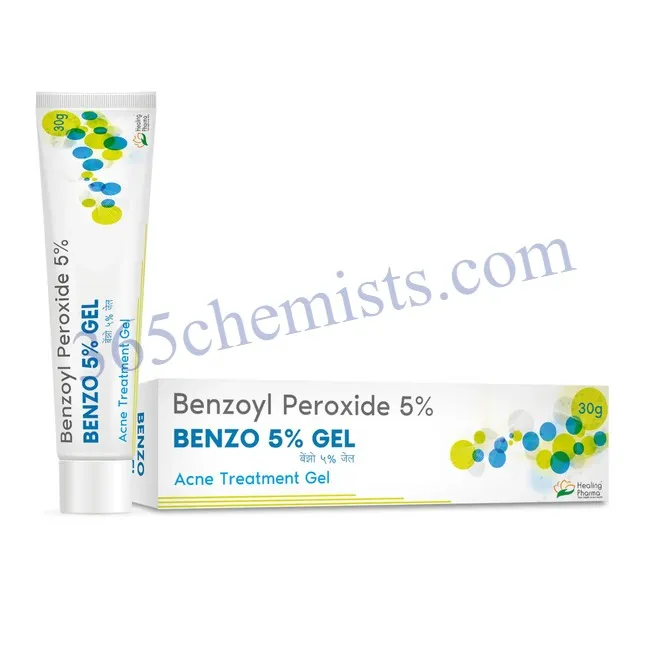

Struggling with stubborn pimples, recurring acne, and clogged pores? Benzo 5% Gel is a topical acne treatment formulated with benzoyl peroxide 5% w/w to help fight acne-causing bacteria, clear blocked pores, and reduce inflammatory breakouts. Its targeted formulation helps manage common acne concerns and supports smoother, healthier-looking skin. If you want an effective solution for managing acne, Benzo 5% Gel can be an option to discuss with your dermatologist. Explore our product details, understand its benefits, and order from our online store.
What Is Benzo 5% Gel?
Benzo 5% Gel is a topical dermatological preparation containing benzoyl peroxide 5% w/w as its active ingredient. Healthcare professionals commonly recommend benzoyl peroxide formulations to manage acne vulgaris, a skin condition that causes pimples, blackheads, whiteheads, and inflamed spots.
Acne develops when excess oil, dead skin cells, and bacteria contribute to blocked hair follicles. These blockages can cause inflammation and visible breakouts. Benzoyl peroxide helps address important factors involved in acne development by reducing acne-associated bacteria and promoting the removal of dead skin cells.
The 5% strength provides a higher concentration than 2.5% benzoyl peroxide formulations. However, a higher concentration does not automatically produce better results and may cause more irritation in some individuals.
Composition of Benzo 5% Gel
The active ingredient is:
Benzoyl Peroxide – 5% w/w.
This ingredient belongs to the topical acne-treatment category. It has antibacterial and keratolytic properties that help manage acne-associated bacteria and blocked pores.
Always check the manufacturer’s packaging for the complete inactive ingredient list, product strength, batch details, and expiry date.
Uses and Benefits of Benzo 5% Gel
1. Helps Manage Acne Vulgaris
Benzo 5% Gel helps manage acne vulgaris by reducing acne-associated bacteria on the skin. It can help improve common acne symptoms, including inflammatory pimples and recurring breakouts. Regular use as directed may support clearer-looking skin.
2. Reduces Acne-Causing Bacteria
Benzoyl peroxide works against Cutibacterium acnes, a bacterium associated with inflammatory acne. It releases reactive oxygen species that create an unfavorable environment for bacterial growth. This antibacterial activity helps reduce one of the important contributors to acne development.
3. Helps Unclog Blocked Pores
Dead skin cells can accumulate inside hair follicles and combine with excess sebum to create clogged pores. Benzoyl peroxide provides a mild exfoliating effect that helps remove dead skin cells and supports clearer pores.
4. Helps Control Inflammatory Pimples
Red, swollen, and irritated pimples often develop when blocked follicles become inflamed. Benzo 5% Gel helps manage these acne lesions by reducing bacterial activity and supporting improved acne control.
5. Supports Long-Term Acne Management
Consistent treatment can help reduce existing breakouts and control the formation of new acne lesions. However, acne often requires ongoing skincare and treatment. Follow your dermatologist’s recommendations to maintain improvement.
Related Product
How Does Benzo 5% Gel Work?
The active ingredient in Benzo 5% Gel, benzoyl peroxide, works through antibacterial and exfoliating actions.
First, benzoyl peroxide releases oxygen-derived compounds within the hair follicles. These compounds help reduce acne-associated bacteria and control bacterial activity.
Second, it helps remove accumulated dead skin cells that contribute to blocked pores. This action supports better pore clearance and reduces conditions that encourage acne formation.
Unlike topical antibiotics, benzoyl peroxide does not rely on the same antibacterial mechanism and helps limit the development of antibiotic resistance when used appropriately alongside certain acne treatments.
How to Use Benzo 5% Gel
Correct application helps you achieve better treatment tolerance while minimizing unnecessary skin irritation.
Follow these general steps:
- Wash your hands before applying the medication.
- Clean the affected skin using a gentle, non-irritating cleanser.
- Pat your skin completely dry with a clean towel.
- Apply a thin layer of Benzo 5% Gel to the acne-affected areas as directed by your product label or healthcare professional.
- Avoid applying excessive amounts or rubbing the gel aggressively.
- Wash your hands after application.
- Use a gentle, non-comedogenic moisturizer to manage dryness.
- Apply broad-spectrum sunscreen during the daytime.
If you are using benzoyl peroxide for the first time, begin cautiously. A healthcare professional may recommend starting with less frequent applications to assess your skin’s tolerance. Do not increase the frequency without professional guidance.
Possible Side Effects of Benzo 5% Gel
Like other topical acne medications, Benzo 5% Gel can cause side effects, particularly when you first begin treatment.
Common side effects include:
- Skin dryness
- Redness and irritation
- Mild burning or stinging
- Itching
- Peeling and flaking
- Temporary skin discomfort
The 5% concentration may cause more dryness and irritation than lower-strength formulations in some people.
Stop using the product and seek medical advice if irritation becomes severe. Rarely, benzoyl peroxide can cause an allergic reaction. Facial or throat swelling, hives, or breathing difficulties require immediate emergency medical attention.
Precautions and Safety Information
Before using Benzo 5% Gel, follow these important precautions.
Avoid sensitive areas: Do not apply the gel near your eyes, lips, mouth, or inside your nose.
Check for allergies: Avoid this product if you have a known allergy to benzoyl peroxide or any other ingredient.
Protect your skin: Avoid unnecessary sunlight exposure and apply appropriate sunscreen.
Avoid broken skin: Do not apply the medication to cuts, wounds, or severely irritated skin.
Prevent fabric bleaching: Benzoyl peroxide can bleach hair, towels, clothing, and bedding.
Avoid excessive application: Using more gel does not speed up acne improvement and can increase irritation.
Check other skincare products: Combining benzoyl peroxide with other irritating acne treatments may increase dryness and peeling. Ask a dermatologist before combining treatments.
Pregnancy and breastfeeding: Consult your healthcare professional before starting treatment.
Storage Instructions
Store Benzo 5% Gel according to the manufacturer’s instructions. Keep the container tightly closed and protect it from excessive heat and direct sunlight. Keep this medication away from children and pets. Always check the expiry date before use.
Why Choose Benzo 5% Gel?
Choosing the right acne treatment can make an important difference in your skincare routine. Benzo 5% Gel contains benzoyl peroxide, an established topical acne-treatment ingredient that addresses bacterial activity and blocked pores.
Its 5% concentration offers an option for people who need a stronger formulation than lower-strength benzoyl peroxide products. However, people with sensitive skin may tolerate lower concentrations better.
For better results, combine appropriate acne treatment with gentle cleansing, regular moisturizing, sun protection, and consistent skincare habits. Consult a dermatologist if your acne causes painful cysts, deep inflammation, or scarring.
FAQs
What is Benzo 5% Gel used for?
Benzo 5% Gel is used to manage acne vulgaris. It helps reduce acne-associated bacteria, remove dead skin cells, and control pimples and inflammatory breakouts.
What is the active ingredient in Benzo 5% Gel?
It contains benzoyl peroxide 5% w/w, an ingredient commonly used in topical acne treatments.
Can Benzo 5% Gel remove pimples?
It can help improve inflammatory pimples by reducing acne-associated bacteria and supporting clearer pores. Results vary between individuals.
How long does Benzo 5% Gel take to work?
Some people notice improvement within approximately four weeks. More significant improvement may take 8–12 weeks of consistent treatment. Individual results vary.
Can I use Benzo 5% Gel every day?
Daily application may be appropriate depending on your skin tolerance and product instructions. Start cautiously and follow your dermatologist’s recommendations.
Reviews
There are no reviews yet.